How to start an affiliate program for your SaaS (2026 guide)
A complete, step-by-step answer to how to start a SaaS affiliate program: pick a commission model, write terms, track real conversions, and recruit your first partners.
By The RewardSpring Team · July 21, 2026 · 6 min read

Starting a SaaS affiliate program comes down to five decisions: what you are rewarding, how much you pay, what your terms say, how you track a real conversion, and who you recruit first. Get those five right and you can go from zero to a live program in a weekend, without an enterprise platform or a spreadsheet you will regret in a month. This guide walks through the full launch sequence in order, with the numbers most SaaS founders actually use.
An affiliate program is one of the highest-leverage growth channels available to a bootstrapped SaaS company. You only pay a partner after a customer has already paid you, so there is no upfront ad spend and no guessing at ROI. One motivated partner — a creator, a consultant, a newsletter writer — can send a steady trickle of qualified signups for months without you touching a paid channel. The failure mode is almost always the same: a promo code, a shared spreadsheet, and a promise to sort out payouts later. That setup survives about three partners. Then a refund breaks your math, someone disputes a commission, and you lose a weekend reconciling exports by hand. A little structure up front avoids all of it.
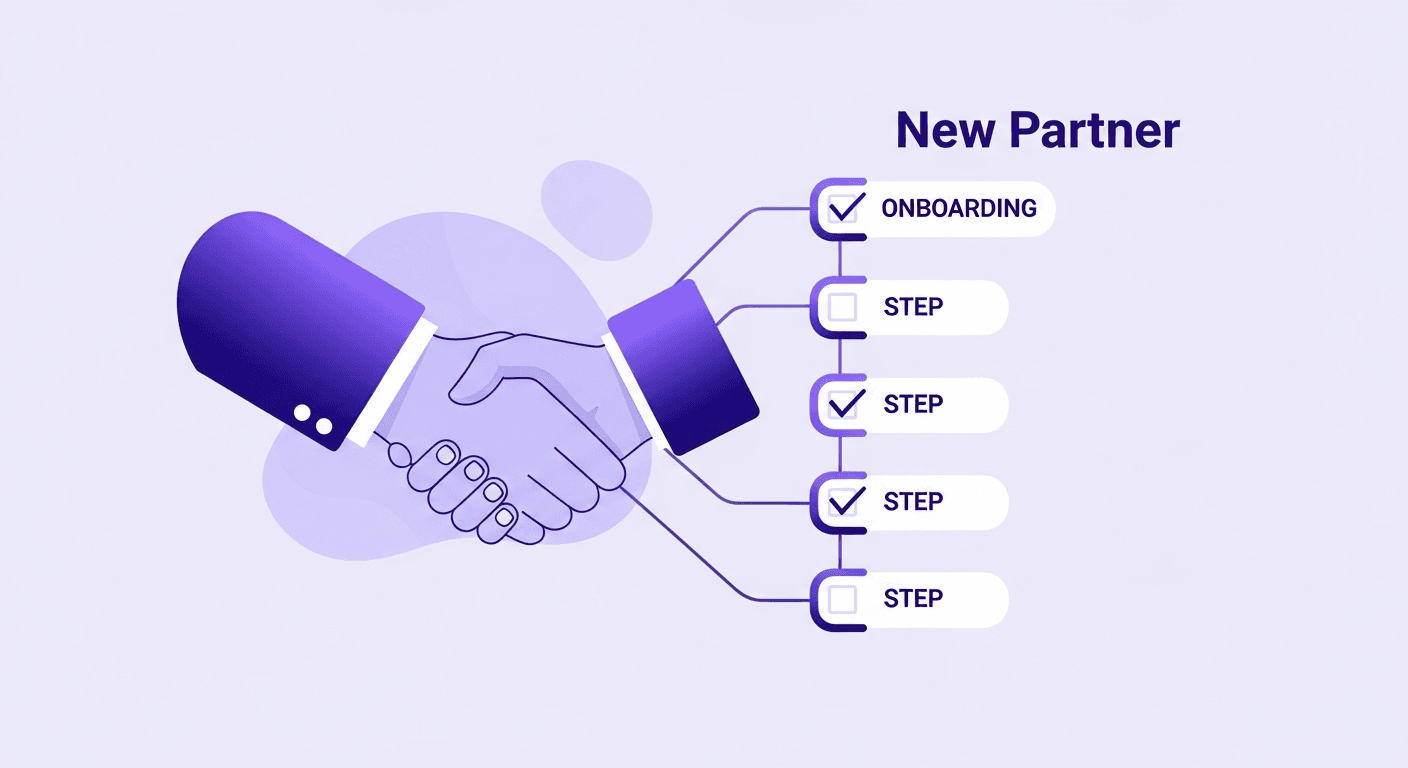
The 7-step launch sequence
Work through these steps in order. Each one depends on the last, and skipping ahead usually just means redoing the step you skipped.
- Decide whether you are launching a partner (affiliate) program, a customer referral program, or both.
- Pick a commission model — a one-time bounty, a recurring percentage, or a hybrid — and set the actual rate.
- Write your terms before you recruit anyone: rate, cookie window, conversion trigger, holding period, and refund rule.
- Connect your billing so conversions are tracked from real paid invoices, not clicks.
- Build a lightweight partner kit: a one-page overview, a tracking link, and 2 or 3 ready-made assets.
- Recruit your first 10 to 20 partners from people who already like your product.
- Review, approve, and pay on a predictable schedule.
Step 1: Decide what you are actually building
A customer referral program rewards people who already pay you for inviting people like them — usually with account credit or a free month. An affiliate, or partner, program pays third parties, who may never become customers themselves, a cash commission for sending you paying customers. The two attract different people and need different language: partners want commission terms and reliable payouts, customers want a fair-feeling perk. Most founders start with a partner program, because a single engaged partner can bring in dozens of signups, but plenty of SaaS companies run both. If you are weighing which to launch first, referral vs. affiliate program: which should your SaaS launch first? covers the tradeoffs in more depth.
Step 2: Pick a commission model — with a real number
Three shapes cover almost every SaaS affiliate program: a one-time bounty (commonly $50 to $150 after the first paid invoice), a recurring percentage (commonly 20% to 30% of every invoice for 12 months), or lifetime recurring, which is generous and worth modeling against your margins before you offer it. For most early-stage SaaS companies, 25% recurring for 12 months is the practical default: it is competitive enough to recruit good partners, and it rewards them for referring customers who actually stick around, not just sign up. If you want the exact math behind why recurring usually beats a bigger one-time bounty, the math of recurring commissions walks through the numbers.
Step 3: Write your terms before you recruit anyone
Publish these five things before you invite a single partner. Vague terms are the single biggest source of disputes six months in.
- Commission rate, and whether it is one-time or recurring.
- How long a referral link gets credit — 30 to 90 days is typical for SaaS.
- What counts as a conversion — almost always the first paid invoice, not a signup.
- Your holding period before a reward is approved — 14 to 30 days covers most refund windows.
- Your refund and clawback rule, so everyone knows what happens if a customer cancels early.
Step 4: Track real conversions, not clicks
This is where programs quietly break. Cookie-only tracking loses referrals to ad blockers, privacy settings, and anyone who switches devices between the click and the purchase. The reliable pattern is webhook-based tracking: your billing provider sends a server-to-server event the moment an invoice is paid, and that event, not a cookie, is what creates the commission. Stripe itself has no built-in affiliate program, but its webhooks and Stripe Connect give you exactly the raw material a tracking layer needs. For the specific setup steps, how to set up an affiliate program with Stripe covers connecting your account and mapping events to commissions.
Step 5 is building a lightweight partner kit: a one-page overview of the offer, each partner's unique tracking link, and 2 or 3 ready-made assets, such as a banner, a short email, and a one-line description, so a new partner can start sharing within minutes of signing up.
Step 6 is recruiting your first 10 to 20 partners. Skip the cold outreach and start with people who already like the product: power users, active community members, and anyone who has referred someone informally already. A short, personal invite — what you are offering, the link, and one asset — beats a public application page every time at this stage. Ten engaged partners will outperform a hundred people who signed up and never shared anything.
Step 7 is approving and paying on a schedule partners can set a clock by. Review pending commissions after your holding period, approve the legitimate ones, and pay on a fixed cadence — weekly, biweekly, or monthly all work, as long as you do not move the date. Even a manual CSV export is fine when you are small; what matters is that partners trust the money will show up. How to pay affiliates goes deeper on methods, timing, and the tax paperwork you will need once payouts start adding up.
Where RewardSpring fits
You do not need an agency or an enterprise platform to run any of this. RewardSpring connects to the Stripe account you already use, tracks conversions off real paid invoices instead of clicks, and lets you set a commission preset in plain language: a percentage, a bounty, or both. Commissions land in a pending state, you approve them, and you export or automate the payout. Partners get their own portal with their link and their numbers, and you keep full control over every reward.
Recap
Seven steps, one weekend: decide what you are building, pick a commission model, write your terms, connect real conversion tracking, put together a partner kit, recruit your first 10 to 20 partners, and pay on a predictable schedule. Do those in order and you will have a program partners trust, and one you can actually maintain past the first month.
Ready to launch? Connect your Stripe account and start your first program free — 14 days, no credit card required.
Run this on your own SaaS
Connect Stripe and launch partner and customer referral programs in minutes.
Start your free trial